


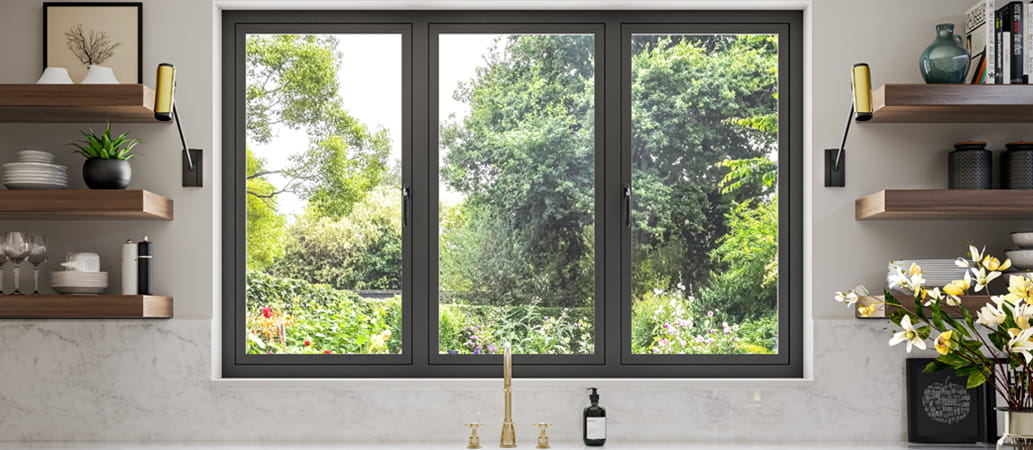
The humble casement window can be considered a true backbone of residential architecture in Britain. Walk down any street in the nation and chances are you'll be able to spot one (or a few dozen more). It doesn't matter if you're looking at a semi-detached from the '30s or a brand-new block of flats: casements are often the go-to choice.
You'll know it when you see it: a casement is a window that's attached to its frame by one or more hinges at the side. It's kind of like a little glass door, since it swings on a vertical axis. So what makes casement windows so special, and why are they used so much in British homes?
For a start, they're versatile and they're simple to use. In this blog, we'll explain how casements work, how much they usually cost, and why they might be the perfect fit for your next home improvement project. We'll go through different styles to compare the best options, and provide our team's top advice on casement window maintenance that actually saves time.
How Casement Windows Work
Let's look at the parts that make up a casement window to understand how they work. Starting with the frame, which is sort of like the skeleton of the window. It's the permanent fixture that is secured directly into the structural opening of the building (the brickwork), and includes the windowsill and mullions and transoms (the vertical and horizontal bars that divide the window into sections).
The casement sash is the 'door' of the window, the moveable frame that holds the glass. You turn the window handle and push or pull, and you're moving the sash. In modern casement windows, there's usually a lip on the sash that sits against the window frame, creating a weatherproof seal when it's closed.
Casements are distinguished by the side-hinge design that means they provide good ventilation and are easy for anyone to use.
Do Casement Windows Open In or Out?
Across the UK, outward-opening is the default for windows, and what you'll most often find. The outward swing is great for space management, since you won't accidentally knock over your houseplants or interfere with your kitchen sink taps when you're opening the window. It also means rain will run off the glass and away, rather than potentially dripping onto your windowsill. Having the sash outward also encourages airflow, which is great for ventilation.
Inward-opening casements are sometimes used on ground floors in busy areas, where an outward swing might obstruct a narrow public pavement, or in purpose-built 'Tilt and Turn' hybrid designs.
Types of Casement Windows
While casement windows all broadly work in the same way, there are lots of different variations of styles and shapes to suit different properties and preferences.
Let's go through some of the most common types of casements, so you'll understand the different options and find the one that's best for your project.
Flush Casement Windows
What Are Flush Casement Windows?
As the name suggests, flush casements sit tightly within the window frame. The sash sits perfectly level with the frame, creating a flat external surface without any overlapping lips or steps.
Flush casements have some heritage appeal, since traditionally, timber windows sat flush with the frame. These days, uPVC flush casements are usually how homeowners get that "country cottage" or period look without the rot and maintenance of real wood. They also work brilliantly in ultra-modern, minimalist designs because of their clean, straight lines.
Double Casement Windows
What Is a Double Casement Window?
Twice the fun, of course! A double casement has two window sashes side-by-side. Usually, one is the primary opener, but both can be functional in certain designs. They're ideal for wider wall openings where a single large pane would be too heavy for the hinges or look a bit clunky. Double casements are usually split by a mullion (vertical strip) down the middle, which provides structural support and is part of their classic look.
Fixed Casement Windows
What Is a Fixed Casement Window?
These are windows that look exactly like a casement (matching the frame profile) but are permanently sealed shut.
Fixed casements are mostly used for higher locations where you wouldn't be able to reach the handle, or next to an opening window to build up a bigger picture window. Because there won't be any hinges or handles, fixed casements are generally cheaper and provide the best energy ratings (thanks to no gaps or leakage points).
French Casement Windows
What Is a French Casement Window?
French casements consist of two sashes that open outward, but unlike a standard double casement, there won't be a central vertical post (mullion). When both sashes are open, you'll have a completely unobstructed open space to look out of.
French casement windows are often chosen where fire safety is a key consideration; because they open up so wide, they often easily meet building regulations for emergency egress (escape routes).
Are Casement Windows Expensive?
Generally speaking, casements are usually one of the most affordable window styles, since they're so frequently used that the manufacturing process is highly streamlined. Of course, larger casements, or styles with more complex glazing or pane requirements will cost more.
However, it's important to remember that properly installed casement windows can also help reduce heating bills thanks to high thermal performance (these days, A-rated glass is the standard).
What Affects the Cost?
Though casements are the standard window choice, there are clearly lots of variations amongst styles and sizes, which in turn impacts the cost. Here are a few factors:
- Material choice: uPVC is the budget-friendly option. Aluminium windows are the option if you want sleeker, thinner frames. Timber is the premium, high-maintenance choice.
- Upgrading hardware: Standard white handles are cheapest. You can upgrade to custom 'Monkey Tail' or 'Pear Drop' handles in chrome, brushed steel or gold finishes, which will add to the unit price.
- Glazing specs: Moving from double to triple glazing, or adding leaded or Georgian-style bars for a traditional look, increases the labour and material cost.
How to Clean Casement Windows
You don't want to add any more complicated tasks to your housecleaning to-do list, so luckily casements are pretty simple to clean.
For the glass itself, a simple mix of soap and water or a proper window cleaner, followed by a squeegee, usually does the trick. Lots of designs come with an easy-clean hinge, which allows the window to slide toward the centre of the frame when it's open, giving you a gap big enough to stick your arm through and clean the outside from the inside. You can use a vacuum or a stiff brush to clear out the bottom of the frame too, to avoid any blockages of drainage holes.
Should You Choose a Casement Window?
So, the bottom line: is a casement window the right choice for your property?
If you're looking for a bright, airy space with good ventilation, it's a good option. Casements are also great as a low-maintenance solution, and offer a good security-to-price ratio.
However, if you're looking for a window for a particularly tall or narrow opening, a sash window might be a better choice. If you're fitting the window onto a walkway or other obstruction, you also might need to be mindful of how much space you'll have to swing the window open.
Speak to the Experts at National Plastics
If you're struggling to choose the right casement window or want some more advice, you're in the right place with National Plastics. Our windows are built to last with high-spec security and thermal technology as standard, so you've got a range of exceptional products to choose from.
We don't just sell window parts; we're experts in a huge range of building products and have worked with thousands of homeowners, tradespeople and DIYers.
Visit Your Local Branch or Send an Enquiry
Use our branch locator to find your local store and visit to see the quality of our casement windows and parts in person. If you're not sure about measurements or materials, our team is here to help: just get in touch and we'll be on hand.
FAQS
What is a casement window?
A casement window is a side-hinged window that opens outward (or occasionally inward) like a door. The movable part, known as the sash, is attached to the frame with hinges and typically operated using a handle or crank mechanism.
Do casement windows open inwards or outwards?
In the UK, most casement windows open outwards. This design helps maximise indoor space and encourages effective ventilation. Inward-opening casements are less common but may be used in certain ground-floor or tilt-and-turn configurations.
How much do casement windows cost?
Casement windows are generally one of the most affordable window styles in the UK. Costs vary depending on size, material, glazing specification, and hardware upgrades. uPVC options tend to be the most budget-friendly, while timber and aluminium designs typically cost more.
Are casement windows suitable for all types of homes?
Casement windows are highly versatile and suit a wide range of properties, from traditional homes to modern builds. However, for very tall or narrow openings, other window styles such as sash windows may sometimes be more appropriate.